
What is home care nursing services in Australia? Learn what is included, who qualifies and how it works. Expert Health Services Sydney. Call today.

Understanding what is home care nursing services is one of the most important first steps for any Australian family exploring aged care options. Whether your parent has recently been discharged from hospital, is managing a chronic illness, or simply needs regular medical attention that is becoming harder to access through a busy GP clinic, home care nursing services bring qualified clinical care directly into the home.
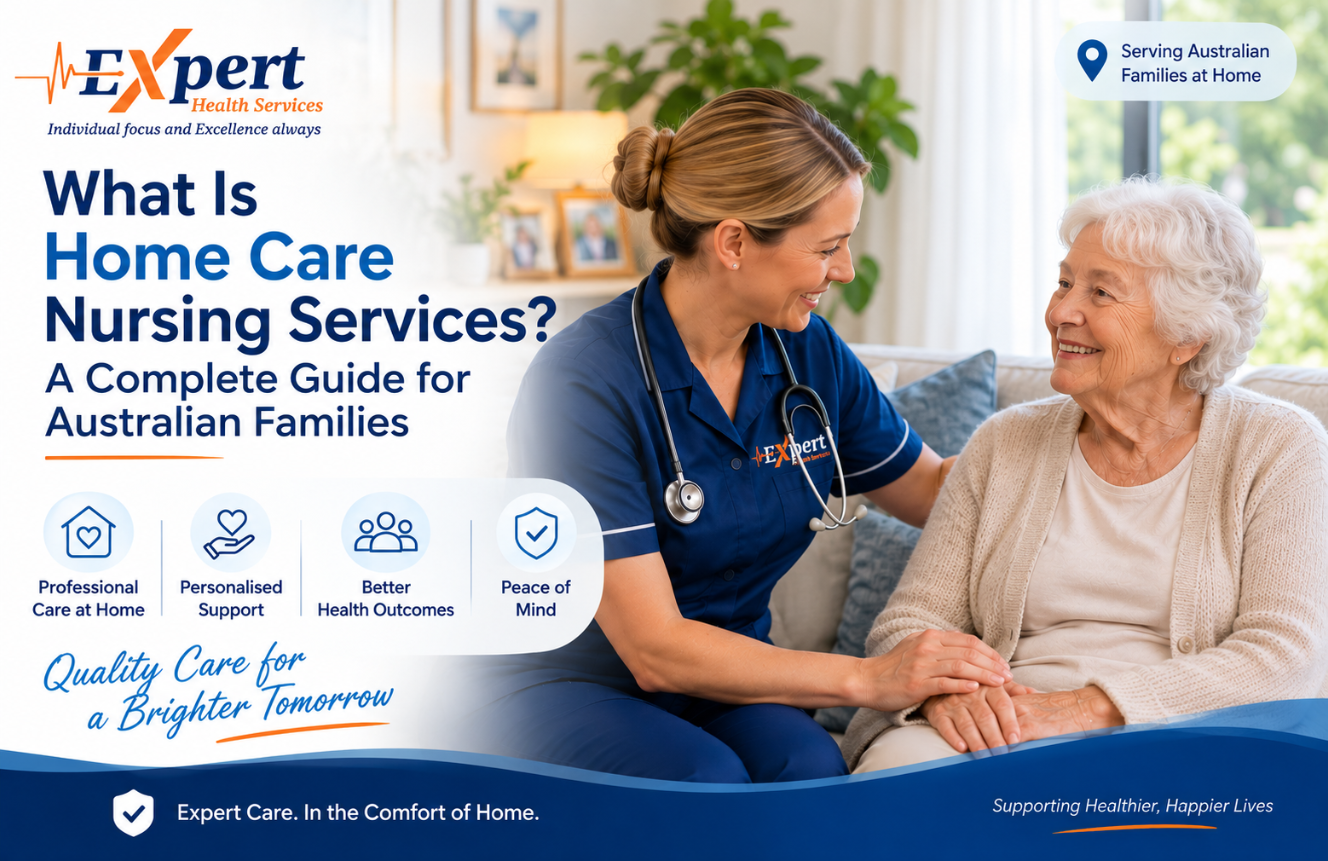
What is home care nursing services in practice? It is the delivery of professional nursing care by registered nurses, enrolled nurses and nurse practitioners in a person’s own home rather than in a hospital, clinic or residential aged care facility. It covers everything from wound care and medication management through to chronic disease monitoring, post surgical recovery and palliative support.
This guide explains exactly what home care nursing services include, who is eligible, how they are funded and how to access them in Australia.
How Home Care Nursing Services Work in Australia
Home care nursing services operate on a simple principle: if clinical care can be safely delivered at home, there is no reason for the patient to travel to a hospital or clinic to receive it.
A qualified nurse visits your parent at their home at a scheduled time, delivers the required clinical care, documents everything in a care plan and communicates with the broader medical team including general practitioners, specialists and allied health professionals.
Who Delivers Home Care Nursing Services?
Three types of nursing professionals deliver home care nursing services in Australia:
Registered Nurses hold a minimum three year university degree in nursing and are registered with the Australian Health Practitioner Regulation Agency (AHPRA). They can assess patients, administer medications, perform wound care, manage complex clinical needs and coordinate care plans.
Enrolled Nurses work under the supervision of registered nurses and hold a diploma qualification. They assist with medication administration, observations, wound dressings and patient monitoring.
Nurse Practitioners hold the highest level of nursing qualification, including a masters degree. They can independently assess, diagnose and treat patients, prescribe medications, order pathology and diagnostic tests, and refer to specialists. At Expert Health Services, our nurse practitioners provide home visits and telehealth consultations with Medicare billing available.
What Services Are Included in Home Care Nursing?
Home care nursing services cover a broad range of clinical care. The exact services your parent receives depend on their individual health needs, their care plan and their funding level.
Wound Care and Management
One of the most common reasons families seek home care nursing services is wound management. This includes:
- Surgical wound care following a hospital procedure
- Chronic wound assessment and treatment for conditions like leg ulcers and pressure injuries
- Diabetic foot wound monitoring and dressing changes
- Burns care and skin tear management
- Regular wound photography and documentation to track healing progress
Our detailed guide on wound care at home in Sydney explains what families should know about managing wounds outside of a hospital setting.
Medication Management
Medication errors are one of the leading causes of hospital readmission in older Australians. Home care nursing services include:
- Medication reviews to check for interactions, side effects and outdated prescriptions
- Webster-pak setup and monitoring to ensure medications are taken correctly
- Insulin administration for diabetic clients
- Injections including subcutaneous and intramuscular medications
- Medication education so clients and families understand what each medication does and why it matters
Chronic Disease Monitoring and Management
Millions of older Australians live with one or more chronic conditions. Home care nursing services provide ongoing clinical monitoring that helps keep these conditions stable and prevents unnecessary hospital admissions.
Conditions commonly managed through home nursing include:
- Type 2 diabetes and associated complications
- Chronic obstructive pulmonary disease (COPD)
- Heart failure and cardiovascular disease
- Asthma
- Dementia and cognitive decline
- Parkinson’s disease
- Chronic kidney disease
- Arthritis and chronic pain
Our guide on facts about diabetes every Australian should know covers how diabetes is managed at home in detail.
Catheter and Stoma Care
For clients with urinary catheters or stomas, regular nursing care at home ensures these are managed safely and hygienically, reducing the risk of infection and complications. Services include:
- Urinary catheter insertion, removal and ongoing management
- Stoma bag changes and skin care
- Monitoring for signs of infection or blockage
- Education for clients and family members on daily care between nursing visits
Post Hospital Discharge Care
The period immediately following a hospital discharge is one of the highest risk times for elderly patients. Home care nursing services provide critical clinical support during this transition, including:
- Monitoring surgical sites and wound healing
- Managing new medications prescribed at discharge
- Observing for signs of complications or readmission risk
- Liaising with hospital discharge teams and general practitioners
- Gradually stepping down nursing visits as recovery progresses
Our guide on post hospital care at home in Australia explains the full range of support available after a hospital stay.

Palliative and End of Life Nursing Care
For families caring for a loved one with a terminal illness, home care nursing services provide compassionate clinical support that allows the person to remain comfortable at home. Palliative nursing care includes:
- Pain management and symptom control
- Coordination with palliative care specialists
- Emotional support for the client and their family
- Assistance with advance care planning documentation
- Overnight and after hours nursing support when needed
Vaccinations and Health Assessments
Home care nurses can administer vaccinations including annual influenza vaccines and COVID 19 boosters directly at home. They also conduct regular health assessments covering blood pressure, blood glucose levels, weight monitoring and general physical observations.
Telehealth Nursing Consultations
For clients who require clinical advice but do not need a physical visit, telehealth consultations with a nurse practitioner offer a convenient and effective alternative. These consultations can be conducted via video call and may be eligible for Medicare billing.
Who Is Eligible for Home Care Nursing Services in Australia?
Home care nursing services are available to a broad range of Australians, not just those in the aged care system.
Aged Care Clients (65 Years and Over)
If your parent is aged 65 or over, they may be eligible for government funded home care nursing through the Support at Home program. Clinical nursing services fall under the Clinical Care category, which is fully funded by the Australian Government with no co-contribution required from the client.
Aboriginal and Torres Strait Islander People (50 Years and Over)
First Nations Australians can access aged care services, including home care nursing, from the age of 50. Expert Health Services is proud to provide culturally respectful care to Aboriginal and Torres Strait Islander clients across Sydney.
NDIS Participants
Some participants in the National Disability Insurance Scheme may have nursing care included in their NDIS plan. Our guide on the difference between NDIS and My Aged Care explains which funding pathway is right for your situation.
Private Clients
If your parent is not yet eligible for government funding, or if they require nursing care while waiting for an assessment, private home care nursing services are available on a fee for service basis. Contact Expert Health Services on 0414 072 871 to discuss private nursing care options and pricing.
How Home Care Nursing Is Different from Personal Care
Families often confuse nursing care with personal care. While both are delivered at home, they involve very different levels of clinical skill and qualification.
Nursing Care
- Delivered by registered nurses, enrolled nurses or nurse practitioners
- Involves clinical assessment, diagnosis and treatment
- Includes wound care, medication management, injections and chronic disease monitoring
- Requires AHPRA registration and clinical qualifications
- Falls under the Clinical Care category (fully government funded)
Personal Care
- Delivered by trained personal care workers
- Involves assistance with daily living tasks such as bathing, dressing, grooming and mobility
- Does not include clinical assessment or treatment
- Requires Certificate III in Individual Support or equivalent
- Falls under Independence Support category (co-contribution may apply)
Most clients who receive nursing care also benefit from personal care services and domestic assistance as part of a complete home care plan. Our guide on what personal care in aged care includes explains this in full detail.
How Home Care Nursing Services Are Funded
Understanding the funding landscape helps families access the right level of support without unnecessary out of pocket costs.
Government Funded Nursing Care (Support at Home Program)
Since November 2025, the Support at Home program has replaced the former Home Care Package system. Under this program, clinical nursing care is classified as Clinical Care and is fully funded by the Australian Government. This means:
- No co-contribution is required from the client for nursing services
- Services are delivered by approved providers like Expert Health Services
- Funding is based on an individual assessment conducted through My Aged Care
To access government funded nursing care, contact My Aged Care on 1800 200 422 or visit myagedcare.gov.au to arrange an assessment.
Medicare Funded Nurse Practitioner Services
Nurse practitioner consultations, whether conducted at home or via telehealth, may be eligible for Medicare rebates. This applies regardless of whether the client has government aged care funding. Our nurse practitioners at Expert Health Services can bill through Medicare, reducing or eliminating out of pocket costs for clinical consultations.
Private Payment
For clients who are not yet approved for government funding, private nursing care is available at hourly rates. Our complete guide on how much home care costs in Australia explains typical pricing and how to reduce expenses.
How to Choose a Home Care Nursing Provider
Not all home care providers offer the same level of clinical nursing care. When choosing a provider for your parent, consider the following:
Clinical Qualifications
Confirm that the provider employs registered nurses who hold current AHPRA registration. Ask whether they also have nurse practitioners on staff, as this provides a higher level of clinical capability including prescribing and diagnostic authority.
Consistency of Care
Ask whether the same nurse will visit your parent each time. Consistency is critical in clinical care because the nurse who knows your parent’s health history will notice changes faster than a different nurse each visit.
Communication with GPs and Specialists
A good nursing provider will communicate regularly with your parent’s general practitioner and any specialists involved in their care. This ensures everyone is working from the same information and that clinical decisions are coordinated.
Range of Services
Choose a provider that offers a full range of services beyond nursing alone. If your parent also needs personal care, domestic assistance or allied health support, having one provider coordinate everything simplifies communication and reduces the risk of gaps in care.
Our guide on how to choose a home care provider in Sydney covers what to look for in detail.
The Benefits of Receiving Nursing Care at Home
Families often wonder whether home nursing care is as effective as care delivered in a hospital or clinic. The evidence is clear: for the majority of non-emergency clinical needs, home based nursing care delivers equal or better outcomes.
Reduced Hospital Readmissions
Regular nursing visits at home catch complications early, before they escalate into a hospital admission. Medication errors are corrected, wounds are monitored and chronic conditions are managed proactively.
Faster Recovery
Patients recover faster in familiar, comfortable surroundings. They sleep better, eat better and experience less stress compared to a hospital environment.
Greater Independence
Home nursing care allows your parent to remain in their own home rather than moving into a residential facility. With the right level of clinical support, many older Australians can safely age at home for years longer than they might otherwise.
Lower Cost
Government funded clinical nursing care has no co-contribution, making it one of the most cost effective ways to manage a parent’s health needs. Even private nursing care is typically less expensive than an equivalent stay in a private hospital.
Our guide on the benefits of professional nursing care at home explores these advantages in further detail.
Frequently Asked Questions About Home Care Nursing Services
What is home care nursing services and how does it differ from hospital care?
Research from the Australian Institute of Health and Welfare indicates that a significant proportion of older Australians experience loneliness, with those living alone, in regional areas or managing chronic health conditions at highest risk. The problem has become more visible since the COVID 19 pandemic, which disrupted social routines many seniors have not fully recovered.
Do I need a doctor's referral to get home care nursing services?
You do not need a GP referral to access home care nursing through the Support at Home program. You simply contact My Aged Care on 1800 200 422 to request an assessment. However, for nurse practitioner consultations billed through Medicare, a referral is not required either as nurse practitioners operate independently. Your GP can still be involved in coordinating your care plan.
How often will a nurse visit my parent at home?
Visit frequency depends entirely on your parent’s clinical needs. Some clients require daily nursing visits for wound care or medication administration, while others may need a fortnightly check up to monitor a stable chronic condition. Your care plan is reviewed regularly and adjusted as needs change.
Is home care nursing available on weekends and after hours?
Availability varies by provider. At Expert Health Services, we work with families to arrange nursing visits at times that suit the client’s routine. Contact us on 0414 072 871 to discuss your specific scheduling requirements.
Can home care nursing services prevent my parent from going into a nursing home?
In many cases, yes. With the right level of clinical nursing support combined with personal care and domestic assistance, many older Australians can remain safely at home for significantly longer than they could without professional support. Home nursing care addresses the clinical needs that most commonly drive the move into residential care.
Access Home Care Nursing Services in Sydney Today
If your parent needs professional nursing care at home, Expert Health Services provides qualified registered nurses and nurse practitioners across South Western and South Eastern Sydney. We deliver clinical care that is compassionate, consistent and coordinated with your parent’s broader medical team.
Whether your parent needs wound care, medication management, chronic disease monitoring or post hospital support, our nursing team is ready to help.
Call us on 0414 072 871
Email: admin@experthealthservices.com.au
Call Expert Health Services on +61 414 072 871 Serving Bankstown, Revesby, Milperra, Randwick, Maroubra and surrounding suburbs