
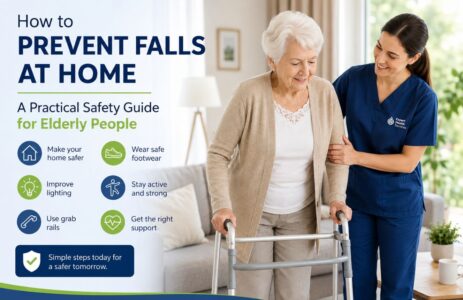
Fall prevention for elderly people is an important part of maintaining safety, confidence and independence at home. Falls can happen for many reasons, including changes in balance, muscle strength, mobility, vision and the home environment.
The good news is that there are practical steps families and carers can take to reduce fall risks at home.
From removing trip hazards and improving lighting to supporting mobility and maintaining physical activity, simple changes can make the home a safer place for elderly people.
In this guide, we explain how to prevent falls at home and how professional care and allied health services can support elderly people to remain safe and independent.
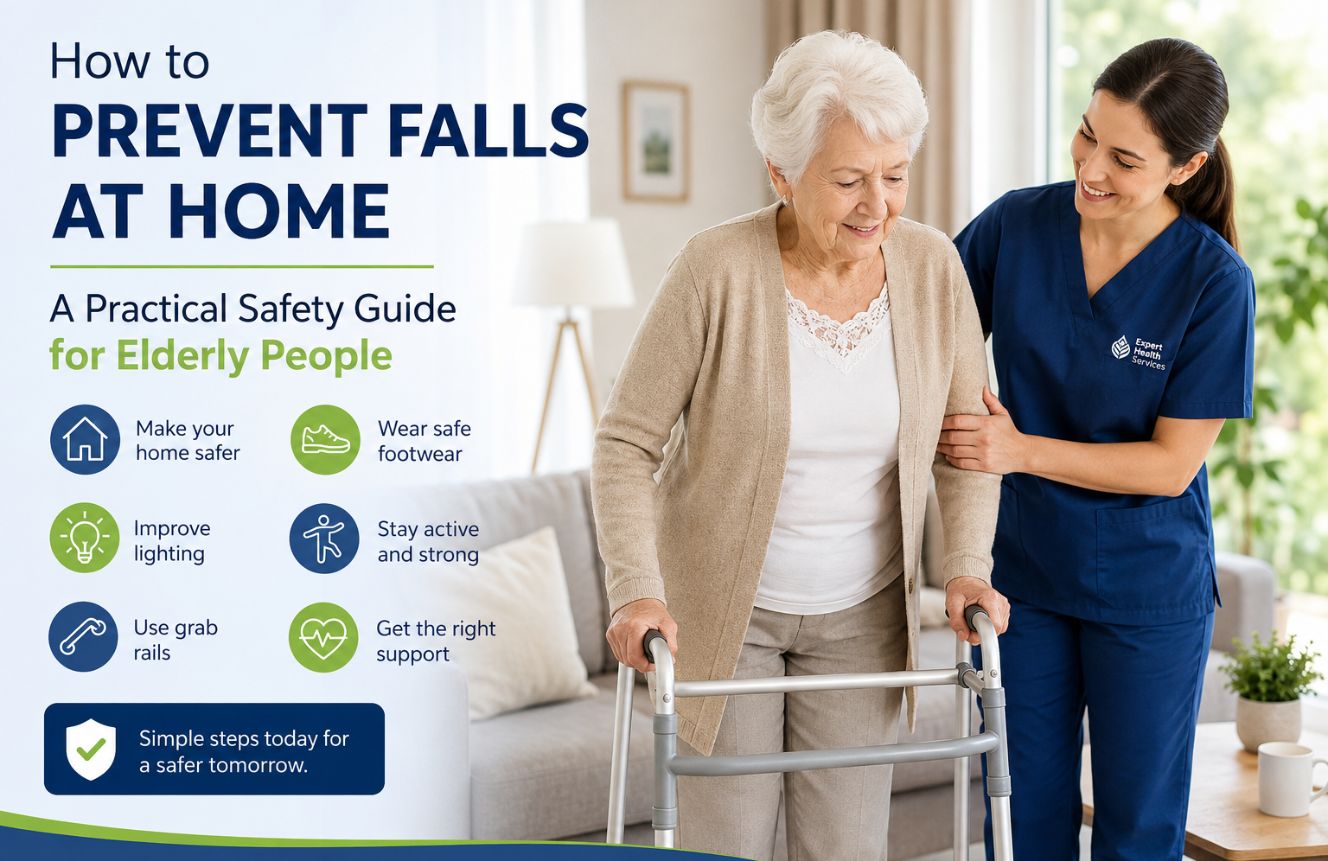
Why Is Fall Prevention Important for Elderly People?
As people get older, changes in muscle strength, balance, coordination, eyesight and mobility can increase the risk of falling. Certain medications and health conditions may also contribute to dizziness or instability.
A fall can result in more than a physical injury. Some elderly people may become worried about falling again and start avoiding activities such as walking, shopping or socialising. Over time, reduced activity can affect strength and mobility.
The Australian Government recommends regular physical activity for older adults, including activities that support mobility, balance and coordination.
Taking steps towards fall prevention can help elderly people maintain their confidence, safety and independence at home.
What Causes Falls in Elderly People?
Falls can happen for many different reasons. Identifying potential risks is an important part of fall prevention for elderly people.
Poor Balance
Changes in balance can make it harder to remain steady while walking, turning, standing or changing direction.
If an elderly person frequently feels unsteady, it is worth discussing the issue with an appropriate healthcare professional.
Muscle Weakness
Reduced muscle strength, particularly in the legs, can make everyday movements more difficult.
Standing up from a chair, getting out of bed or climbing stairs may become more challenging when muscle strength decreases.
Poor Vision
Changes in eyesight can make it harder to see obstacles, steps, uneven surfaces or objects on the floor.
Regular eye checks and appropriate vision correction can help elderly people see potential hazards more clearly.
Medication Effects
Some medications can cause side effects such as dizziness, drowsiness or changes in blood pressure.
If an elderly person experiences dizziness or unusual weakness after taking medication, they should speak with their doctor or pharmacist. Medication should not be stopped without professional advice.
Unsafe Footwear
Loose slippers, poorly fitting shoes and footwear without adequate grip can increase the risk of slipping or losing balance.
Supportive, well-fitting footwear can provide greater stability when walking around the home.
Hazards Around the Home
Loose rugs, electrical cables, clutter, wet floors and poorly positioned furniture can create trip hazards.
Keeping frequently used areas clear is one of the simplest ways to improve home safety.
10 Ways to Prevent Falls at Home
Making a few practical changes around the home can help reduce common fall hazards.
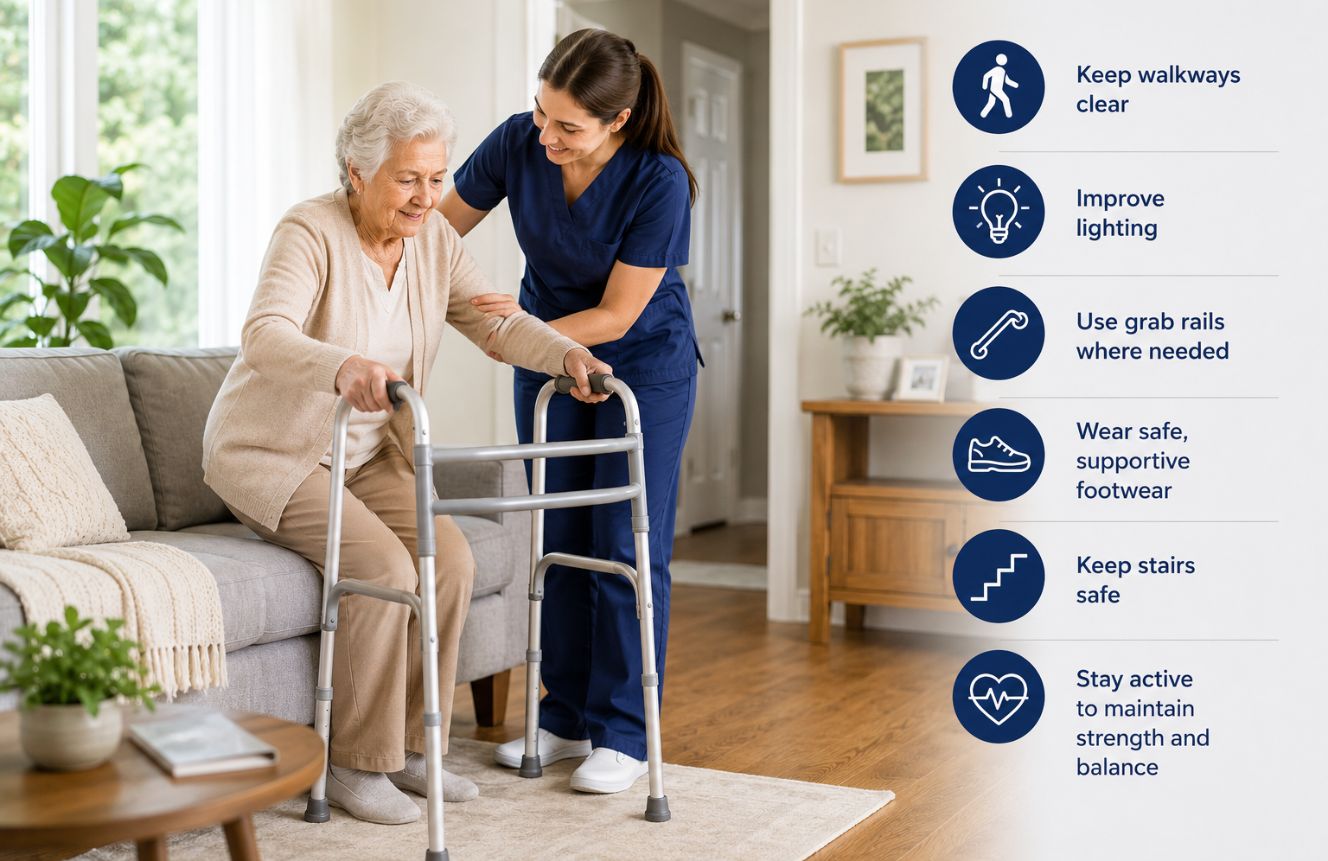
1. Keep Walkways Clear
Remove boxes, bags, furniture and other objects from hallways and frequently used walking areas.
There should be enough space for an elderly person to walk comfortably, particularly if they use a walking stick or walking frame.
2. Remove Loose Rugs and Mats
Loose rugs and mats can move unexpectedly and become trip hazards.
Remove unnecessary rugs or use suitable non-slip solutions to keep them securely in place.
3. Improve Lighting
Poor lighting can make obstacles and changes in floor levels difficult to see.
Make sure bedrooms, hallways, stairs, bathrooms and entrances have adequate lighting.
Night lights can also be useful if an elderly person needs to get out of bed during the night.
4. Make the Bathroom Safer
Bathrooms can be particularly risky because water can make surfaces slippery.
Consider:
- Using suitable non-slip surfaces
- Keeping floors as dry as possible
- Installing appropriate grab rails
- Using a suitable shower chair if recommended
- Keeping toiletries within easy reach
- Ensuring the bathroom is well lit
5. Use Grab Rails Where Appropriate
Grab rails can provide additional support in areas where an elderly person may have difficulty maintaining balance.
They may be useful around showers, baths and toilets.
However, grab rails should be appropriately positioned and securely installed. Professional advice may be useful when deciding which equipment is suitable.
6. Keep Stairs and Hallways Safe
Stairs should be well lit and free from objects.
Where appropriate, secure handrails should be available. If an elderly person is finding stairs increasingly difficult, a professional assessment may help identify safer options.
7. Store Everyday Items Within Easy Reach
Elderly people should avoid standing on chairs or unstable stools to reach high cupboards.
Frequently used items should be stored at a comfortable height so they can be reached without stretching or climbing.
8. Wear Supportive Footwear
Choose footwear that fits securely and provides suitable support and grip.
Avoid walking around the home in loose slippers or socks without appropriate grip.
9. Use Mobility Aids Correctly
Walking sticks, walking frames and other mobility aids can provide valuable support when they are correctly selected and used.
If an elderly person is unsure whether they need a mobility aid, or whether their current aid is suitable, they should seek professional advice.
10. Keep Outdoor Areas Safe
Fall prevention should also include outdoor areas.
Check pathways, entrances and garden areas for:
- Uneven surfaces
- Loose paving
- Wet or slippery areas
- Poor lighting
- Garden hoses
- Objects blocking pathways
Keeping outdoor areas maintained can make entering and leaving the home safer.
How Exercise Can Help Prevent Falls
Regular physical activity can help elderly people maintain strength, mobility, balance and coordination.
The Australian Government’s current recommendations for adults aged 65 and over include muscle-strengthening activities on at least two days per week and functional activities targeting mobility, balance and coordination on three or more days per week.
However, exercise should be appropriate for the individual’s abilities and health.
An elderly person with significant mobility problems, a history of falls or concerns about balance should speak with an appropriate healthcare professional before beginning a new exercise programme.
When Should an Elderly Person Have a Fall Risk Assessment?
A fall risk assessment may be useful if an elderly person:
- Has fallen recently
- Feels unsteady while walking
- Has difficulty standing from a chair
- Uses a walking stick or walking frame
- Has become afraid of falling
- Finds stairs difficult to manage
- Experiences frequent dizziness
- Has noticed a decline in mobility
- Has difficulty completing everyday activities safely
A professional assessment can help identify possible risk factors and determine what support may be appropriate.
How Professional Care Can Help Prevent Falls
Fall prevention is not only about making changes to the home. Professional care and allied health support may also help elderly people maintain their mobility and independence.
Physiotherapy and Allied Health Support
Physiotherapy can support elderly people with mobility, strength, balance and physical function.
A physiotherapist can assess an individual’s needs and recommend appropriate exercises or strategies.
Expert Health Services provides allied health support services in Sydney, including physiotherapy and occupational therapy.
Occupational Therapy
An occupational therapist can assess how an elderly person manages everyday activities and identify ways to make those activities safer.
This may include recommendations for:
- Bathroom safety
- Mobility around the home
- Assistive equipment
- Transfers
- Daily activities
- Home modifications
A home-based occupational therapy assessment can be particularly useful when the main concern is safety within the person’s own environment.
Personal Care Support
Some elderly people need assistance with activities such as bathing, dressing, grooming, walking or transfers.
Professional personal care services at home can provide support with these everyday activities while helping the person maintain as much independence as possible.
Nursing Care at Home
Some falls may be associated with underlying health conditions, medication concerns or changes in a person’s overall health.
Professional nursing care at home in Sydney can provide clinical support and health monitoring based on an individual’s needs.
If an elderly person experiences repeated falls, sudden weakness, dizziness or a significant change in mobility, appropriate medical advice should be sought.
What to Do If an Elderly Person Falls
If an elderly person falls, do not immediately try to lift them if you are unsure whether they are injured.
First, check whether they are conscious and responsive and look for signs of serious injury.
If there is severe pain, significant bleeding, suspected fracture, head injury, loss of consciousness or another medical emergency, seek urgent medical assistance.
If the person is not seriously injured but cannot safely get up, they may still need assistance.
The Australian Government’s fall-prevention guidance recommends having a plan for getting help if a fall occurs.
Fall Prevention Checklist for Elderly People
Use this simple checklist to identify common hazards around the home:
- Walkways are clear of clutter
- Loose rugs have been removed or secured
- Hallways and stairs are well lit
- Bathroom floors are safe and dry
- Appropriate grab rails are installed where required
- Frequently used items are easy to reach
- Footwear fits properly and provides adequate support
- Outdoor pathways are maintained
- Mobility aids are suitable and used correctly
- Difficult daily activities are supported where necessary
- Recent falls or balance concerns have been discussed with a healthcare professional
Frequently Asked Questions About Fall Prevention
What is the best way to prevent falls at home?
The best approach is to combine home safety improvements with appropriate physical activity, suitable footwear, regular health checks and professional assessment when mobility or balance problems are present.
How can I make my home safer for an elderly person?
Keep walkways clear, improve lighting, remove or secure loose rugs, make bathrooms safer, install appropriate support rails and keep frequently used items within easy reach.
Can physiotherapy help prevent falls?
Physiotherapy may help improve strength, mobility and balance. A qualified physiotherapist can assess an individual’s needs and recommend an appropriate programme.
Can home care help prevent falls?
Home care can provide assistance with activities such as bathing, dressing, mobility and transfers. This can help elderly people manage activities that may otherwise be difficult or unsafe to complete alone.
When should an elderly person seek medical advice after a fall?
Medical advice should be sought when there is significant pain, suspected injury, head injury, loss of consciousness, bleeding, sudden weakness or other concerning symptoms.
Conclusion
Fall prevention for elderly people involves more than simply removing a loose rug or installing a grab rail. It means looking at mobility, balance, strength, vision, footwear, daily activities and the overall safety of the home.
Simple changes can reduce common hazards and help elderly people remain confident and independent at home.
For people who need additional support, physiotherapy, occupational therapy, nursing care and personal care can all play a role in maintaining safety and independence.
Expert Health Services provides personalised home care and allied health support across South Western and South Eastern Sydney.
If an elderly person experiences repeated falls, sudden weakness, dizziness or a significant change in mobility, appropriate medical advice should be sought.
Call Expert Health Services on +61 414 072 871 Serving Bankstown, Revesby, Milperra, Randwick, Maroubra and surrounding suburbs